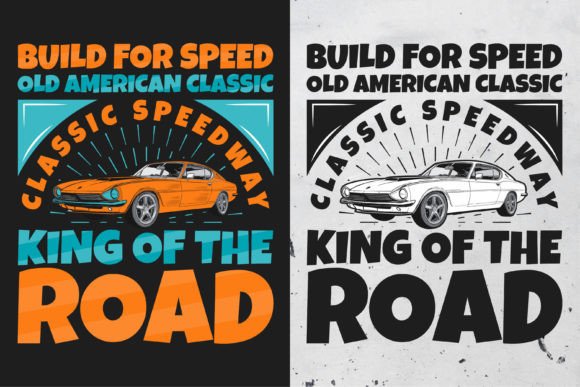
Reviewing the Build for Speed Vintage Car Graphics
The Immediate Impression: Nostalgia with a Modern Edge
When you first open the Build for Speed Old Classic Car Tshirt bundle, the mood is instantly clear. It doesn’t shout; it evokes. The clean lines and stylized retro cars communicate a sense of heritage, passion, and craftsmanship. This isn’t a chaotic clipart pack—it’s a curated set of graphics with a distinct visual tone. For a brand designer, this first impression is crucial. It tells me this asset is suitable for lifestyle content, event promotions for car shows or vintage markets, product launch visuals for a boutique auto shop, or commercial marketing materials targeting enthusiasts. It brings an emotional connection of nostalgia and authenticity, which can be a powerful lever in content marketing.
Fitting Into a Real Marketing Project: Launching a Seasonal Coffee Brand
Let’s frame this around a real case. Imagine a small business, perhaps a specialty coffee roaster, is launching a seasonal “Drive-In Brew” collection. They need packaging design, social media graphics, and email banners that tie the coffee experience to a classic Americana road trip vibe. The Build for Speed graphics become more than just a Car SVG bundle; they become a core brand identity element. The vintage car icons can be used as decorative accents on the product label, the main hero graphic for the campaign header, and sliced into individual elements for a series of Instagram posts. This ensures visual consistency across all touchpoints, building stronger recognition and a professional appearance for the launch.
Where This Design Asset Performs Excellently
In practical branding and marketing situations, this graphic design asset shines in specific applications. Its scalable SVG format makes it ideal for:
- Logo design for clubs, blogs, or small shops where a car icon is central.
- Social media graphics, especially as Pinterest pins and Facebook ads targeting niche hobbies.
- Blog graphics and website headers for editorial content about restoration or history.
- Email banners promoting events or Car gifts and merchandise.
- Lead magnets like downloadable posters or Canva templates for a community.
- Printable promotions such as event flyers for a local race or meet-up.
- Product presentation for Car sweatshirts and hoodies, using the designs directly.
The key is its ability to create a clearer visual hierarchy. A strong, simple car illustration becomes the focal point, allowing supporting text and branding to complement rather than compete.
Supporting Core Marketing Goals Beyond Decoration
A great digital product like this supports strategic goals. For the content marketer, it’s a tool for building audience trust through consistent, high-quality visuals. It enables a stronger first impression on a landing page or ad. The nostalgic emotion it carries can translate to better engagement in social posts. For a small business branding itself around a hobby or passion, these old car designs provide more memorable campaign visuals than generic stock photos. They help the brand look curated and intentional, which is vital in crowded creative marketplaces.
Practical Applications: Best Use Cases
Integrate the Build for Speed Old Classic Car Tshirt assets as:
- Hero graphics for a website selling retro car parts.
- Campaign headers for a “Summer Road Trip” sale.
- Branded templates for a publisher’s monthly newsletter.
- Social media covers to refresh a page seasonally.
- Packaging accents on boxes for Car lover subscription boxes.
- Content bundles like media kits for automotive influencers.
- Promotional banners in digital ads with a clear call-to-action overlay.
- Editorial layouts in online magazines or blog features.
- Decorative brand elements on invoices, thank you cards, or packaging inserts.
Caution Zones: Where to Use with Care
As a brand designer, I must also note where this printable design should be applied carefully. The stylized, thematic nature means it may clash with:
- Formal corporate branding for financial or tech services.
- Dense information layouts where the icon could become visual clutter.
- Small mobile graphics if the detail isn’t simplified for tiny sizes.
- Low-contrast backgrounds that reduce its impact and readability.
- Overly minimal brands that rely purely on typography.
- Text-heavy ads where the asset might distract from the core message.
- Designs where the car competes with another primary visual element.
The Brand Designer’s Checklist Before Deployment
Before dropping this into a live campaign or client work, follow these practical steps:
- Test it with your brand color palette. Do the monochrome lines work, or should you recolor them?
- Check black and white usage for any print scenarios where color isn’t available.
- Place it inside real campaign mockups—a phone screen, a web banner, a t-shirt template—to see scale and balance.
- Preview it on mobile screens to ensure it remains recognizable.
- Test readability in small sizes, especially if used next to small text.
- Compare it against competitor visuals to ensure your use stands out.
- Check how it pairs with different font styles: a bold sans serif for modernity, a serif for tradition, a script for elegance, or a display font for impact.
- Review spacing and balance when combined with logos and text blocks.
- Confirm commercial licensing before using it in paid campaigns or business branding. This is a non-negotiable step for any professional branding.
Final Thoughts: A Versatile Tool for Targeted Connection
The Build for Speed Old Classic Car Tshirt bundle, as a Print Templates and Graphics product, is a specific but powerful design asset. From a brand and content marketer’s perspective, its value lies in its focused aesthetic. It won’t suit every project, but for those targeting car enthusiasts, vintage lifestyle audiences, or brands building on nostalgia, it provides a cohesive visual language. It supports content marketing by offering ready-made illustrations that attract attention without looking messy. By applying it strategically—as a hero element, a consistent accent, or a template base—you can achieve more consistent branding, improved audience trust, and ultimately, better product presentation. It’s a creative design resource that, when used with the designer’s checklist in mind, can elevate a real-world marketing project from generic to genuinely engaging.