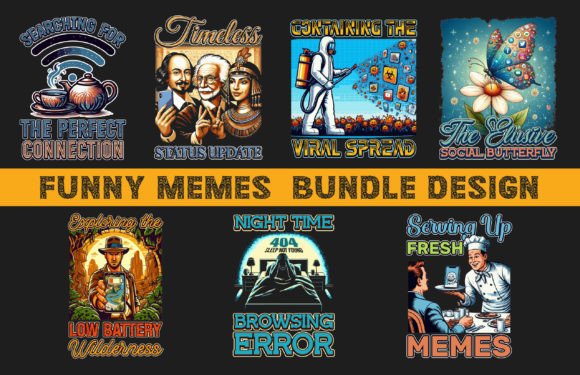
Evaluating a Funny Memes T-Shirt Bundle for Real Client Graphics and Print Templates
When a new graphic design asset lands in your digital toolkit, your first job as a professional is to vet it for practical use. It’s not just about whether it’s cool; it’s about whether it can carry a client’s vision from concept to polished final product. Today, I’m reviewing a digital product titled the Funny Memes T-Shirt Bundle. My lens is a specific, real-world scenario: I’m developing a visual identity for a new, quirky Etsy shop selling handmade novelty gifts. The owner wants branding that feels approachable, relatable, and instantly engaging—a mood that humor-driven graphics can often establish.
First Impression: A Mood of Instant, Relatable Connection
Opening the bundle, the immediate impression is one of casual, contemporary fun. The designs aren’t just clipart; they’re cultural snippets, visual shorthand that speaks directly to a specific, often online-savvy audience. This asset doesn’t represent minimalist or corporate style. Instead, it leans into a pop-culture, conversational aesthetic. For my Etsy client project, this is promising. It suggests a brand personality that’s friendly, unpretentious, and built on shared understanding. The style naturally fits projects for small businesses, local event merch, seasonal campaigns for cafes or boutiques, or any product line targeting a community that values humor and recognition.
Performance in Real Design Situations: Beyond the T-Shirt
The bundle’s title mentions t-shirt design, but a professional designer’s mind immediately extrapolates. How do these graphics perform across the full spectrum of a client’s needs?
For logo design or primary brand identity, these meme-style illustrations likely serve as supporting elements, not the main logo mark. They’re excellent for creating a cohesive family of icons for social media graphics, packaging design details like sticker seals, or patterns on product labels. In editorial design for a blog or website, they could act as playful section dividers or accent graphics alongside articles about pop culture.
Their strength shines in campaign visuals and merchandise. Imagine a launch series of Instagram posts, Pinterest pins, and digital ads for my client’s Etsy shop, all using a consistent meme graphic as a thematic thread. They translate beautifully to tangible products: not just t-shirts, but mugs, tote bags, sticker designs, and even printable wall art. As a design bundle, the provided formats—like PNG—allow for quick application onto product mockups to present concepts to the client.
Where This Asset Works Best: Creating Cohesion and Emphasis
In the hands of a designer, the Funny Memes T-Shirt Bundle excels in specific applications. Use these graphics as hero graphics on a website landing page for a limited-time campaign. They can dominate large layout areas on a poster or flyer for a community event, creating immediate visual interest. They work perfectly as decorative accents in a themed collection—say, a “Saturday Vibes” series of products in my client’s shop. Their inherent recognizability makes them powerful for building audience engagement and emotional appeal; people connect with what they already understand.
Where to Apply Caution: Hierarchy and Context Matter
Professionalism in commercial design means knowing an asset’s limits. These graphics require careful application in certain contexts. In small sizes—like on a business card detail—the intricate humor and text elements may become illegible and lose impact. Avoid crowded layouts; these designs need space to be understood. Placing them on complex backgrounds can destroy visual hierarchy and readability.
This asset is not a fit for professional corporate materials, financial reports, or brands built on minimalist branding and solemn trust. The mood is inherently informal. For my Etsy client, this is fine, but for a law firm’s marketing visuals, it would undermine visual trust. Always consider if the humorous tone aligns with the project’s core brand consistency.
The Designer’s Practical Checklist Before Client Use
Before committing this bundle to a paid project, I run through a standard set of technical and legal checks.
- File Format Utility: The bundle includes PNG and JPEG files in a zip folder. PNGs with transparency are crucial for layering on mockups and designs. I immediately test a PNG on a dark and light background to check contrast and edge clarity.
- Scalability Test: I preview a graphic at both a tiny size (for a web icon) and a large size (for a poster). This reveals if the design retains its character and legibility when scaled.
- Print Quality Preview: For print-on-demand or sublimation design applications, I place the graphic on a realistic t-shirt or mug mockup. I check for pixelation or blurring that might occur in print.
- Color and Contrast: I convert a key graphic to black and white. This tests if the design’s composition holds up without color, important for some production methods or accessibility considerations.
- Font and Style Compatibility: I experiment by pairing the graphic with different typography—a clean sans serif font, a playful script font. Does the meme graphic clash or harmonize with the chosen text style for the brand?
- Commercial Licensing: This is paramount. I confirm the license explicitly allows use for client projects, small business branding, and sale on platforms like Etsy. Never assume; always verify for commercial design assets.
Final Judgment: A Niche Tool for Building Specific Brand Energy
After this review, the Funny Memes T-Shirt Bundle emerges as a specialized, but potent, creative design asset. For my hypothetical Etsy shop project, it’s a strong candidate. It provides ready-made visual language to build a relatable, engaging brand world. It can accelerate the creation of marketing visuals, social media graphics, and a cohesive line of printable designs and merchandise.
Its value isn’t in universal application, but in targeted use. For designers, brand owners, and digital sellers working in spaces where humor and cultural connection are the currency, this bundle offers a shortcut to that visual mood. It’s not the foundation of a logo, but it can be the delightful wallpaper of a brand’s entire customer experience. Used thoughtfully, with attention to scale, context, and licensing, it can help a handmade business or seasonal campaign feel polished, coherent, and conversation-ready.