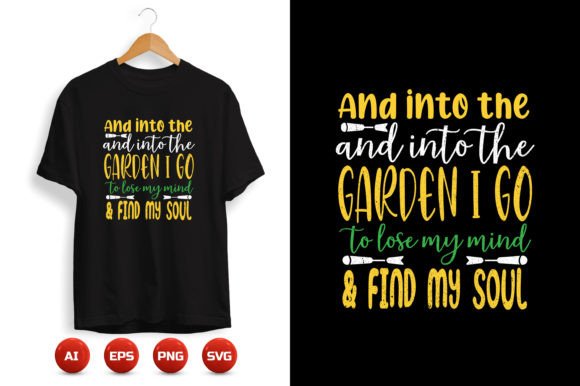
A Designer’s Review of the Gardening T-shirt Design 27
As someone who’s been in the embroidery business for years, I look at a design file not just as a graphic, but as a blueprint for a real, stitched product. It needs to work on fabric, appeal to a real person, and hold up as something you can sell or gift with confidence. So when I opened the Gardening T-shirt Design 27, my first question was: does this feel like something I’d actually embroider?
The First Impression: A Quiet Moment in Thread
The phrase “And into the garden I go to lose my mind find my soul” gives this design its personality. It’s not a loud, graphic statement; it’s contemplative and personal. The layout feels balanced, with the text integrated into the botanical theme. As a machine embroidery design, the visual style suggests clean lines and open spaces, which is promising. It doesn’t look overly dense or packed with tiny details that might get lost in stitching. My immediate thought was that this belongs on relaxed, comfortable items. It has a giftable, heartfelt quality that isn’t tied to a specific season, making it versatile for a craft business.
Where This Design Finds Its Home
I pictured this embroidered on a soft, cotton-linen blend tote bag first. It’s the perfect canvas for a sentiment like this—something a person uses daily, a quiet reminder. But the applications go much wider. On a heavyweight sweatshirt, it would become a cozy, personal statement. For baby embroidery, simplifying the design slightly on a little romper could make a beautiful, gentle nursery-themed item. As an embroidered patch, it could be applied to a gardener’s apron or a canvas hat. I also considered it for pillow covers or kitchen towels—home goods where the text resonates. For Etsy sellers or small shop products, this design lends itself to personalized gifts, especially for weddings, new homes, or anyone with a love for gardening.
The description notes it’s from a category labeled Print Templates and Graphics, and comes as a bundle of vector files. This is excellent for us as embroidery designers because it means the core artwork is scalable and adaptable. We can use these files to create our own embroidery file paths, adjusting stitch types to match the vector shapes. This flexibility is key for translating a graphic into a successful embroidery project.
The Real-World Stitching Considerations
Now, for the practical judgment. The phrase “Possible and easy change color” from the description is a major plus. In embroidery, thread color contrast is everything. I’d test this on both light and dark fabric backgrounds. On a dark heather gray sweatshirt, perhaps using a palette of cream, sage, and soft gold threads would make it pop. On a white baby onesie, richer greens and a muted brown could work beautifully.
However, this design requires some careful planning. The text is integral. In embroidery, especially at smaller sizes, tiny lettering can become blurry if the stitch density is too high or the running stitch paths are too fine. I would not recommend trying to stitch this very small, perhaps on a cap’s curved panel, without first testing the legibility. Similarly, on highly textured fabrics like some linens or boucle sweaters, the finer details might not translate clearly.
The open, vector-based design suggests areas that could be rendered as satin stitch for the lettering and perhaps fill stitch for any botanical elements. But that’s a decision you, as the embroidery designer, must make when digitizing. Always test on scrap fabric first. Use the proper stabilizer for your chosen fabric—this is not a step to skip. The hoop size should be comfortable to accommodate the entire design without crowding, ensuring the stitch clarity remains high.
When to Approach with Caution
There are a few scenarios where I’d proceed with extra care. Thin, stretchy jersey for t-shirts requires very thoughtful digitizing and stabilization to prevent puckering, especially with any filled areas. Layered garments with seams or pockets might interfere with the design’s placement. And for products destined for frequent washing, like kitchen towels, you’d want to ensure the stitch coverage is solid and secure to maintain that handmade presentation over time.
The Value It Adds to Your Work
From a commercial and artistic perspective, Gardening T-shirt Design 27 elevates a simple item. It turns a plain tote into a thoughtful, marketable product. It increases product value because the design carries emotional weight. For a customer, it feels specific and personal, which builds customer trust in your brand as a maker who understands their taste. As a personalized gift, it has high recognition and giftability—it clearly speaks to a gardener or nature lover.
Using this as part of your craft business lineup can enhance brand consistency if you specialize in botanical or inspirational themes. It looks professional when executed well. For digital product sellers, the source files allow for creating printable mockups to showcase the final product in your listings, driving buyer engagement. It’s a versatile design asset.
Final Designer Notes Before You Hoop
Before you commit this design to a client’s order or your next batch of small shop merchandise, do your homework. Test it in black and white mockups to check contrast. Confirm the licensing terms for the files—can you use them for both personal and commercial embroidery projects? The product description mentions you will get multiple file formats, which is great, but always verify the specifics for your intended use, especially if selling the finished product or derived digital embroidery files.
Inspect the small details in the artwork. Are there any corners or curves that might be challenging to stitch smoothly? Plan your thread colors to complement the fabric, not just the graphic on screen. And remember, the best embroidery project starts with a design that feels right not just on the monitor, but in your mind as a stitched, tangible object. This design, with its soulful quote and natural theme, has that potential. It asks for a careful, quality translation from vector to thread, and in return, it can create a truly lovely piece of custom apparel or a cherished gift.
So, take the Gardening T-shirt Design 27, open your software, and start thinking in stitches. Imagine it on that tote bag, that sweatshirt, that baby blanket. If it feels right, you’ve likely found a design that will resonate far beyond the hoop.